A Dutch buyer asks whether your car has a “NAP”, and you are not sure what is meant. NAP stands for Nationale Autopas, the national car pass. It was a register of mileage readings kept by a foundation, Stichting NAP. The readings are now registered by the RDW, the Dutch vehicle authority, and the RDW gives a verdict on them. This post explains what that verdict says, how you check your own car for free, and what to do with the result before you sell. The mileage also feeds into the value of the car, which our guide on what your car is worth covers.
If you are preparing a sale, the steps for the whole process are in the how it works page. This post covers only the mileage.
What the mileage register is
Garages and inspection stations record the mileage of a car at certain moments. The RDW says on its page about odometer readings that businesses it recognises register readings at legally required moments. Examples it names are an APK inspection, the installation of LPG, an export, a change of ownership by a recognised company, and repairs, maintenance or a tyre change at any recognised company.
The RDW manages the register. It has registered readings since 1 January 2014, according to its page on checking the mileage. Before that, Stichting NAP registered readings until the RDW took over.
The register holds the readings that were passed on, and the verdict looks at whether they make sense together. It does not show a full history of the car.
The three verdicts
The RDW gives one of three verdicts for cars and business vehicles.
- Logisch. Every registered reading is higher than the one before it.
- Onlogisch. A registered reading is lower than the previous one. The RDW gives this verdict only for readings from after 1 January 2014. The cause can be a typing error or a turned-back odometer, which is why buyers react to this verdict.
- Geen oordeel. There is too little information to give a verdict. If Stichting NAP gave an Onlogisch verdict earlier, the RDW gives no verdict in its place.
No verdict is given for motorcycles, because there is too little information. Readings are still recorded for them.
How to check your own car
The check is free. The RDW describes two ways.
- If you know the exact reading, enter the number plate and the reading on the RDW check page. You receive an email with a link to the verdict. The RDW does not send a document, so take a screenshot if you want to keep it. The registered readings themselves are not shown.
- If you do not know the reading, use the RDW Kentekencheck, which needs only the plate. It reflects the last reading stored with the RDW, and that can be out of date.
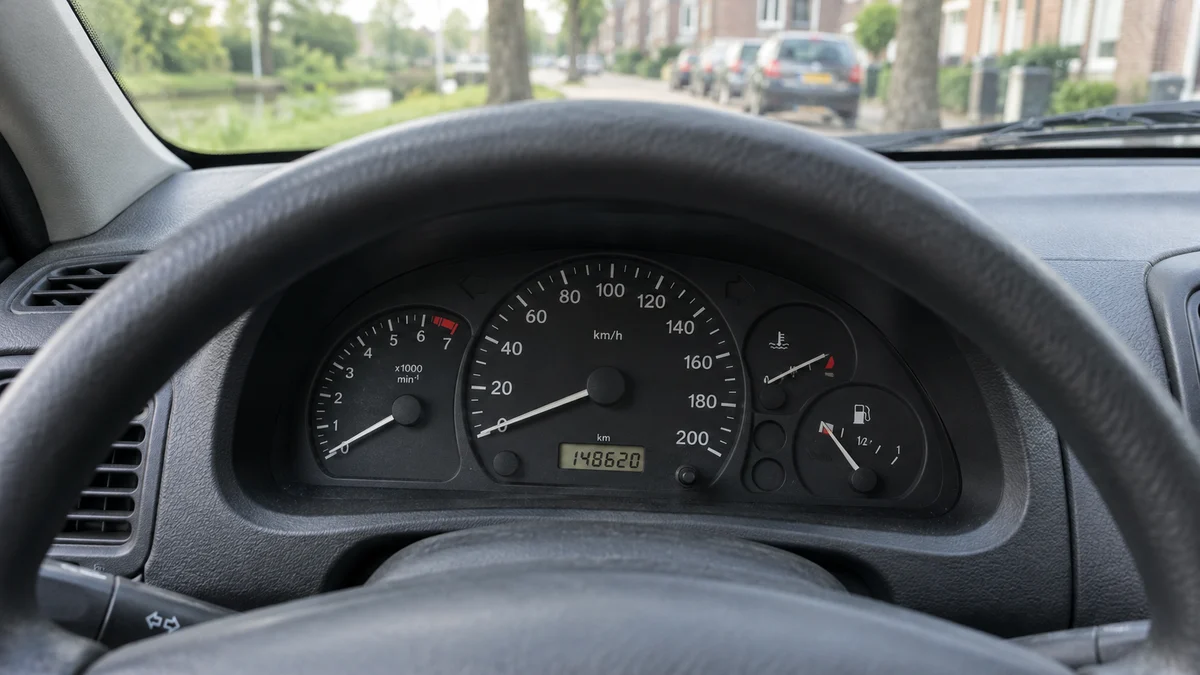
Do this with the real odometer reading from the dashboard, taken on the day. A buyer or a buyer service can run the same check with your plate, so it is better that you know the result first.
Why a buyer asks
Mileage is one of the facts a buyer weighs when valuing a used car, and a photo cannot prove it. A buyer who asks about NAP wants to know whether the number on the dashboard fits the readings that garages passed on. Mileage also appears in the sales contract: the ANWB lists it among the arrangements to write down. The post do you need a sales contract explains how.
Be honest about what you know. If a clock was replaced or repaired, say so. If you bought the car abroad, say that too. The post what lowers your car’s value lists the other points buyers weigh.
Imported cars and gaps
A car that was registered abroad before it came to the Netherlands has a history that began elsewhere. The RDW notes that it has included Belgian readings in the register since January 2025, and that it uses German readings from 3 February 2026. Readings from other countries are not mentioned on the page we read, so a verdict of Geen oordeel can be the honest result for such a car.
If you imported the car yourself, keep any papers from the country of origin that show the mileage at export or import. They help a buyer who asks.
If the register shows a wrong reading
The RDW says that the owner can request a correction of a wrong reading. The page we read for this post does not describe the procedure, so look at the current RDW page or contact the RDW. A typing error at a garage is the usual example, but the RDW does not name a cause on the pages we read.
What to do before you sell
- Run the free check with your plate and the real reading.
- Collect the paper evidence: APK reports, service invoices and any receipt with a mileage on it.
- If the verdict is Onlogisch or Geen oordeel, work out why and write down the explanation.
- Tell the buyer the facts, including the verdict.
If the NAP result looks good and you want to sell, get an offer. Asking is free, and we can help in English.
Frequently asked questions
What does NAP mean?
Nationale Autopas, a register of mileage readings that was kept by Stichting NAP. The RDW now registers readings and gives the verdict.
Is the RDW mileage check free?
Yes. The RDW says the Kentekencheck is free of charge.
What does Geen oordeel mean?
There is too little information to judge the readings. The buyer may ask you for an explanation, for example when the car was imported or the odometer was replaced.
What does Onlogisch mean?
A registered reading is lower than the one before it. It can come from a typing error or from a turned-back odometer.
Can I get a document with the verdict?
No. The RDW sends an email with a link and no document, so take a screenshot to keep the result.