When you sell your car to a private buyer in the Netherlands, nobody forces you to sign a contract. The transfer at the RDW, the Dutch vehicle authority, is a separate step that the buyer carries out, and it does not require a sales agreement. Even so, a short written agreement is worth the effort. This post explains why, what to write down, and which questions a contract does not settle.
The general order of a private sale is in the guide selling a car in the Netherlands. Here we look only at the agreement between you and the buyer.
Is a verbal agreement valid
Yes. The ANWB, the Dutch motoring association, says on its page about the purchase agreement that a sale is concluded as soon as buyer and seller agree. It adds that a spoken agreement binds as much as a written one, and that it is wise to put the arrangements on paper.
The reason is simple. If the buyer says later that you promised a second key, a new set of tyres or a particular mileage, you have only your memory against theirs. A paper with both signatures settles many of those disagreements before they start. It helps even more if you and the buyer do not share a first language.
What to write down
ANWB advises recording the agreements in writing, and names the price, the delivery period, the colour and model, the mileage, the delivery time and the accessories. For a private sale of a used car, that translates into a short list.
- The names, addresses and signatures of buyer and seller, and the date.
- The number plate (kenteken), make, model and the chassis number (VIN) from the registration card.
- The mileage on the day of the sale.
- The price and how it is paid. Write the amount as agreed and say when the payment is made.
- What is included: keys, the registration card handover, service books, winter tyres, a charging cable for an electric car.
- Known faults and damage. Write down what you know, with a short description.
- The date and place of the handover.
Photos taken on the day of the sale also work as a record of the condition, so keep them with the contract.
Tell the buyer what you know
The ANWB page says that the seller must tell what he knows about the vehicle. It also says that with a used product the buyer has to do more research than with a new one. Both halves matter for your contract. If you know about a fault, a past accident or a warning light, say so in the agreement. A buyer who agreed to the car with that knowledge has a harder time complaining about it afterwards.
A sentence such as “sold as seen” does not replace telling the buyer what you know, as far as we can tell from the ANWB text. If the car has a significant problem and you want legal certainty, ask a lawyer or the ANWB legal advice service. We do not give legal advice, and we leave out claims about what a clause would achieve in court.
The ANWB model contract
The ANWB publishes a model agreement called Koopovereenkomst gebruikt motorvoertuig, under the heading Koopcontracten on its model contracts page. It is a PDF in Dutch. The page does not describe the content or say whether it is meant for private parties, so read the document before you use it and check that it matches your situation. If you prefer English, write your own list from the section above, and ask the buyer to sign a Dutch version as well if they prefer one.
What the contract does not do
A sales contract and the transfer of the registration are two separate things. The contract records what you and the buyer agreed. The registration changes only when the buyer completes the transfer with the RDW. The RDW tells sellers to keep the car until the transfer is done and the proof of transfer (vrijwaringsbewijs) is in their hands, as set out on its page about selling a car.
So a signed contract does not make you safe from fines or road tax on a car that is still registered to you. Only the transfer does that. The post the buyer did not transfer the car describes what happens when the buyer drives away before registering it.
Payment and the day of the handover
Agree the form of payment in advance and write it in the contract. Whatever you agree, do not hand over the car, the registration card and the registration code (tenaamstellingscode) before you have the proof of transfer. The sequence of the day is in the guide above.
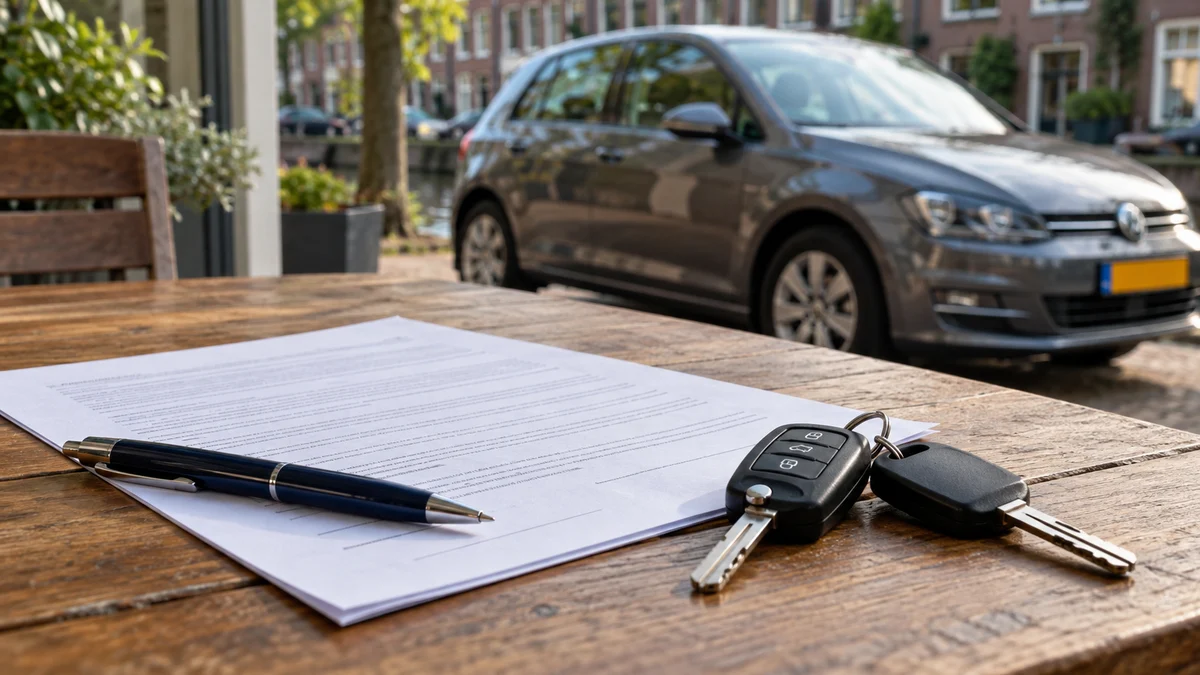
Keep one signed copy and give one to the buyer. Store your copy together with the proof of transfer and the APK report you gave the buyer.
Prefer to skip the contract questions? Get an offer from us and we talk you through the next steps. There is no obligation, and the payment and transfer details are settled when you accept.
Frequently asked questions
Is a written sales contract required by law for a private car sale?
No requirement appears on the pages we checked. The ANWB says a verbal agreement binds as much as a written one, and advises writing the arrangements down.
Which details should be in the contract?
Price, delivery date, mileage, colour and model, accessories and any special arrangements, according to the ANWB. Add the number plate, the VIN, known faults and the names of both parties.
Can I write the contract in English?
The pages we read do not set a language. Both parties need to understand what they sign, so if the buyer reads Dutch better than English, offer a Dutch version next to the English one.
Does the contract transfer the car into the buyer’s name?
No. The buyer registers the transfer with the RDW, online or at a counter. Until that is done, the car is registered in your name.
Do I have to mention faults I know about?
The ANWB says the seller must tell what he knows about the vehicle. Put the faults you know in the contract.