Tell us about your car
Enter your number plate and we look the car up in the Dutch vehicle register. Then answer a few short questions: the mileage, whether it drives, and any damage. Add photos if you have them.
Here is every step of selling your car to us, and what each Dutch term along the way means.
Enter your number plate and we look the car up in the Dutch vehicle register. Then answer a few short questions: the mileage, whether it drives, and any damage. Add photos if you have them.
A member of our team reads your answers and looks at your photos. If something is unclear, we ask you before we make the offer.
The email links to your own offer page, where you can accept the offer, decline it or suggest an amount of your own. Take your time. Saying no costs nothing.
We collect the car for free wherever it is in the Netherlands, at a time that suits you. We check it together and transfer it out of your name at the RDW on the spot. You are paid at the handover and receive the proof of transfer.
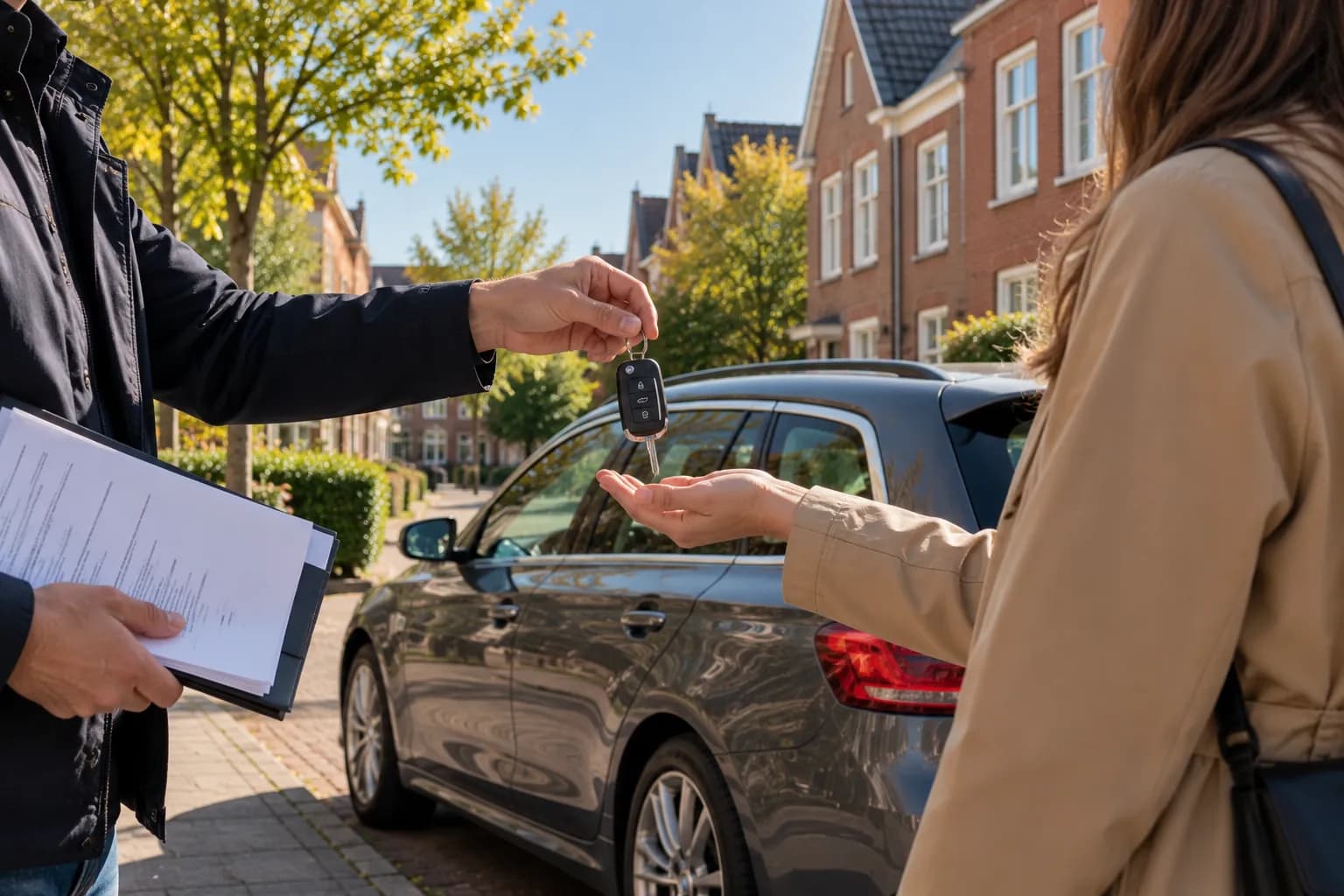
What happens on the day we collect the car, and why you can take your time before that day.
We come to the car, wherever it is in the Netherlands: at your home, at work or at a storage address. You choose the day and the time with us, and the collection costs you nothing. A car that does not drive, or has no valid APK, is collected without driving it on the road.
During the visit we transfer the car out of your name at the RDW. You hand over the registration card and both parts of the registration code, and you receive the proof of transfer (vrijwaringsbewijs) before we leave. From that moment the road tax, the insurance duty and any fines are no longer yours.
Payment is made at the handover itself, when the car and the keys change hands. Look in your own banking app to see it arrive. You do not have to chase anything afterwards.
There is no deadline on your answer. The offer stays open on your offer page until you accept or decline it, unless we send you a new one. Compare it with other buyers, wait for your next car or plan around a move, and accept when it suits you.
The number plate does most of the work, because the register already knows the make, the model, the year and the fuel. You add the mileage, whether the car drives, and anything you would point out if we were standing next to it. Photos help but are not required.
A clear request with photos is the easiest for us to answer. If something does not add up, we ask you first, so the offer is based on the right information.
People leaving the country often accept weeks before they want the car collected, and that is fine. Your offer stays open on your offer page until you answer it, unless we send you a new one. If you have not replied after a few days, you receive one reminder email, and nobody will phone you to chase an answer.
The RDW is the Dutch vehicle authority. Every car here is registered to a person or company in its register. Selling the car means moving it out of your name. Until that has happened, the car is legally still yours.
The kentekencard is the credit card sized registration card that shows the car is registered to you. A car that has not changed owner since 2014 may still have the old paper registration (kentekenbewijs). That is still valid. Bring every part you have.
The tenaamstellingscode has nine digits and comes in two parts. Part 1 (four digits) is on the tenaamstellingsverslag, the receipt you were given when the car was put in your name. Part 2 (five digits) is on the letter your registration card arrived with. You need both parts to transfer the car, so find them before the day. If one is lost, the registered owner can request a new code from the RDW.
The vrijwaringsbewijs is your proof of transfer. You receive it once the car is moved out of your name. From that moment the road tax, the fines and the liability are no longer yours. The road tax (motorrijtuigenbelasting) stops by itself and the Belastingdienst refunds what you paid in advance. Keep the proof, and tell your insurer the car has been sold.
You need nothing but your number plate to ask for an offer. These are for the day of the handover.
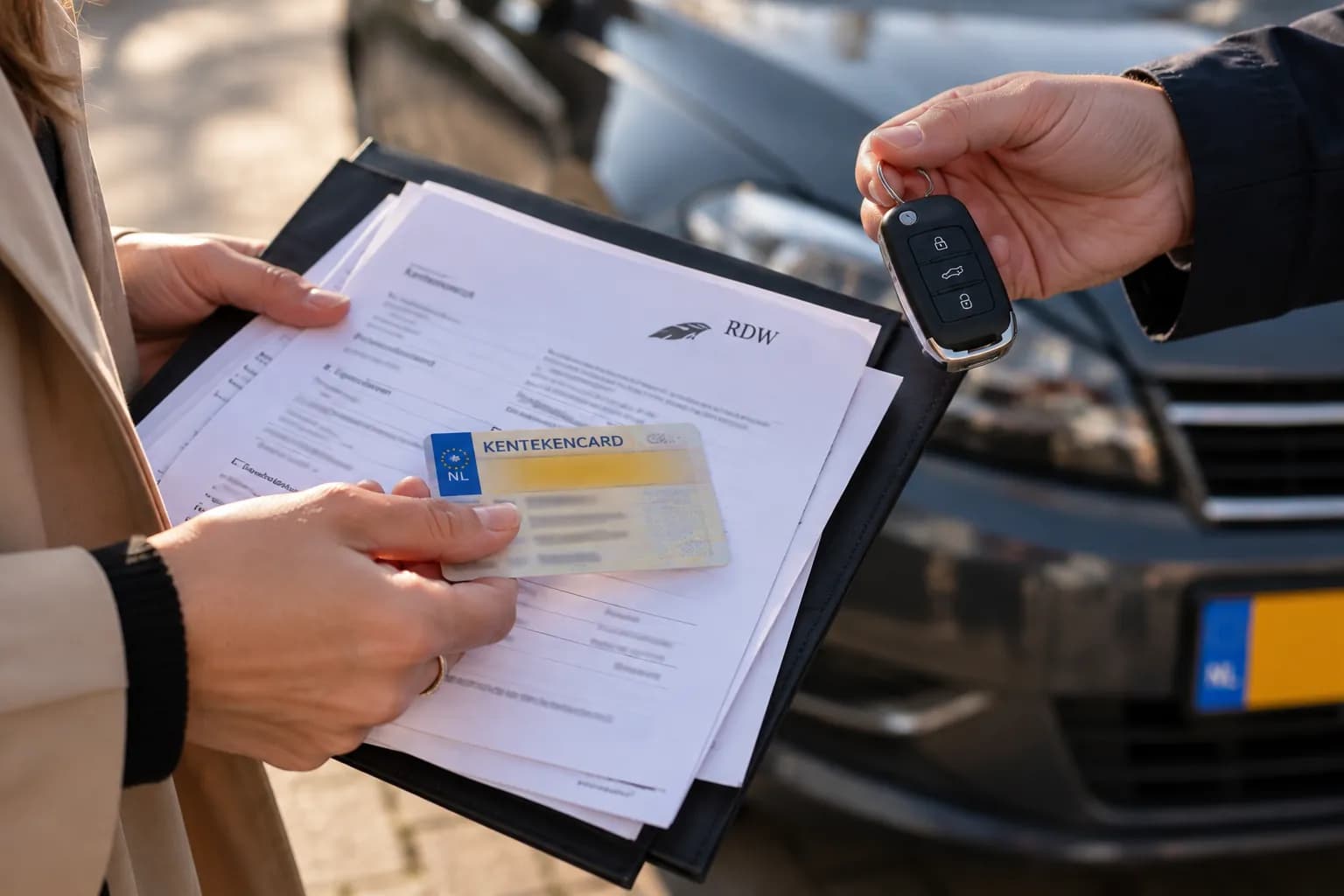
Your number plate (kenteken) and the mileage. We look up the make, model, year and fuel in the Dutch vehicle register. You do not need any paperwork until the handover.
The request is short, because the number plate fills in most of the details. A clear request with photos is the easiest for us to answer. If something is unclear, we ask you first. Once you accept, you choose the handover day.
We look at what the register says about the car, what you told us about its condition, and what that model is worth on the Dutch market now. Photos help, because they let us judge your car itself.
Your offer stays valid with no end date, so take your time to think it over. It stays on your offer page until you accept or decline it, unless we send you a new one. If you have not replied after a few days, we send you one reminder email. We do not send more than that.
Tell us. You can suggest an amount of your own on your offer page and we will look at it properly. If we cannot agree to it, we tell you so.
Only the person the car is registered to can sell it, because the transfer needs their registration code and their passport or ID card. If the car is in someone else's name, that person has to take part in the sale.
At the handover. Once we have checked the car and transferred it out of your name at the RDW, we pay you straight away.
Enter your number plate and mileage. Asking is free and you are not committing to anything.