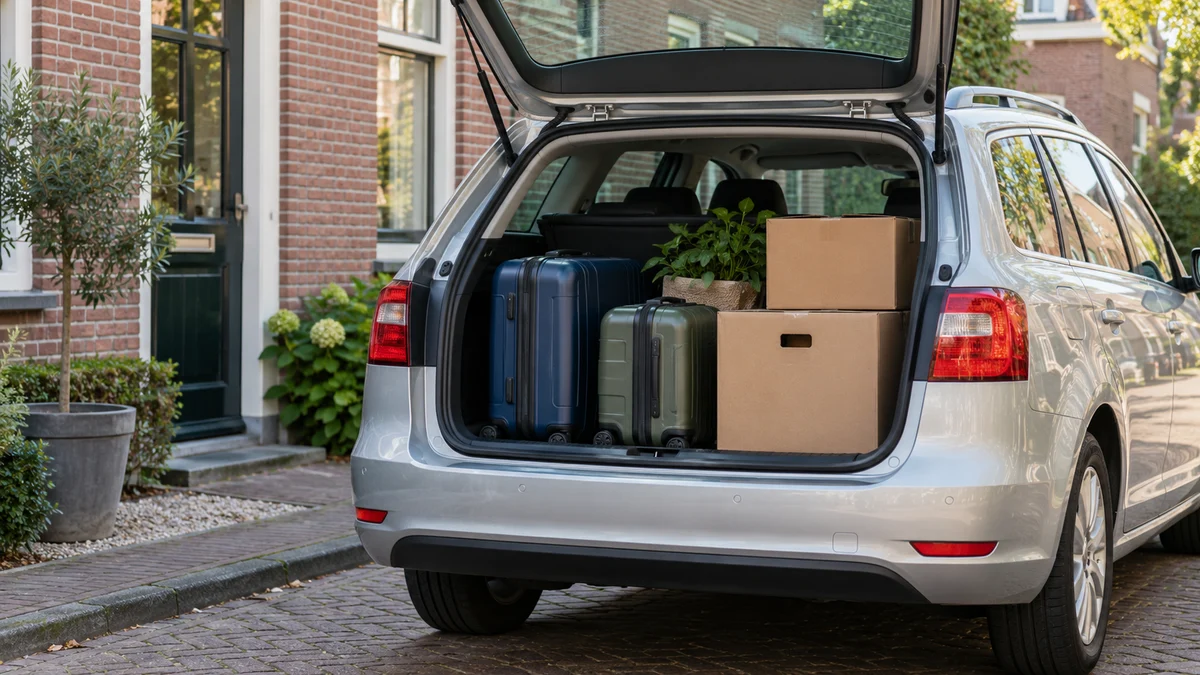
A December move gives you a hard deadline and a calendar full of holidays. Flights, removal companies and the end of a rental contract usually leave you with one fixed date, and the car has to be gone by then. This post starts from that date and works backwards, so you can see what to do in which week. It also covers the case that worries most people: the buyer has not turned up and the date is getting close.
Your plan for the car depends on whether you sell, export or leave it behind. The guide to selling your car before you leave explains those choices in full. For a general countdown, see our moving abroad checklist for your car. This post is about the timing problem of one specific month.
Work back from your moving date
Write down the day you leave the Netherlands. Then mark three earlier dates: the day the car must be out of your name, the day the buyer collects it, and the day you start looking for a buyer. The gaps between those dates are your safety margin.
The margin matters in December for a practical reason. Many people are away, offices keep shorter hours and post can be slow. We cannot give you exact closing times, because they differ per organisation, so check the opening hours of your municipality (gemeente), your insurer and anyone else you need before you plan the last week.
A useful rule is to aim for the car to be out of your name well before the week you leave. The final week should be free for packing, farewells and deregistering.
Ten to eight weeks before: sort the documents
Start with the paperwork, because a missing document is the most common reason a sale stalls. You need:
- the registration card (kentekencard), or the old paper registration (kentekenbewijs) on an older car
- both parts of the registration code (tenaamstellingscode), nine digits in total
- the latest APK report; the APK is the Dutch roadworthiness test
- your service history and any spare keys
If a part of the registration code is missing, order a replacement now. A code that is sent by post goes to the address registered with your municipality, and posting takes time. Leased or financed cars are different: the lender holds the documents and the code, and only the lender can release them. Ask early, because lenders can be slow to respond.
Check the APK expiry date in the Kentekencheck on the RDW website. The RDW is the Dutch vehicle authority. A car that is heading for an expired test is harder to sell in a hurry, so book the test if the date falls inside your selling window.
Eight to six weeks before: choose how the car leaves
Decide which route you take and stick to it.
Sell it. Selling to a buyer in the Netherlands is usually the simplest route. The RDW states that the buyer must be registered in the personal records database (BRP) with a Dutch address in order to transfer the registration. Details are on the RDW page about transferring a registration number. A buyer who lives abroad cannot do this, so the car would have to be exported.
Export it. If you take the car with you, read the RDW page on exporting a vehicle and check what the destination country requires before you do anything here.
Suspend the registration. If the car stays in the Netherlands unused, the RDW can suspend the registration for one, two or three years. The car must then stand on private property. Read the RDW page on requesting a suspension for the conditions and fees.
This is also the moment to ask for offers. If you sell to us, you can get an offer in English, free and without obligation. We collect the car for free anywhere in the Netherlands, transfer it out of your name at the RDW on the spot and pay you at the handover. That makes the date of the handover the date the car is gone.
Four to two weeks before: fix the handover
By now a buyer or an offer should be in place. Agree a date for the handover and put it in writing. Then check these points.
- Keep the WA insurance (third-party liability) running. The RDW expects a registered car to be insured, so cancel only after the register shows the car out of your name.
- Keep the proof of transfer (vrijwaringsbewijs) once you receive it, and photograph it.
- Settle small contracts tied to the car, such as a parking permit, a garage space or a fuel card.
- Tell your lease or finance provider if the loan is still running.
Do not hand over the keys before the transfer is complete. If you sell privately, write down the date, the time, the mileage and the names of both parties.
The last two weeks: deregister in the right order
Deregistering from the BRP comes after the car. According to netherlandsworldwide.nl, you can deregister from five days before your departure until the day you leave, if you will live abroad for more than eight months within a year. The procedure differs per municipality, so read the page on how to deregister from the BRP and the government.nl answer on when to deregister.
Why does the order matter? Because documents and letters about the car still reach you at your registered Dutch address. Once that address is gone, a missing document is much harder to replace.
What if the sale runs late
Say it is three weeks before your flight and nothing is settled. You still have options.
- Change the route. A private sale that depends on viewings is hard to hurry. A buyer service that collects the car removes the viewings from the plan. Ask for an offer and agree a handover date that is before you leave.
- Suspend the registration. If the car cannot be sold in time, suspending it stops the road tax, the insurance duty and the APK obligation, as long as it stands on private ground. You can sell it later, because the RDW says a suspension ends on transfer. Check the fees first, since there is no refund if you end it early.
- Export it. This only works if you can register it in the destination country, so check that first.
- Keep the Dutch address a little longer. If your own plans allow it, a short delay in deregistering gives you time for the last paperwork.
Do not leave the car on the street with the insurance cancelled. The registration is still in your name, and the fines and obligations stay with you until the register changes.
After you have left
Keep the proof of transfer where you can reach it from abroad. If a fine arrives for a car you no longer own, the proof is what you send with your objection.
Frequently asked questions
When should I start selling my car if I leave in December?
Start the paperwork about ten weeks before you leave, and look for a buyer or an offer about eight weeks before. No authority sets those dates. They are our planning advice, so that a late buyer does not take your whole last month.
Can I sell the car after I deregister from the BRP?
It is possible, but harder. Documents about the car are sent to the address registered with your municipality, and you must be able to receive the proof of transfer. Complete the car first and deregister afterwards.
Can a buyer who lives abroad register my car in the Netherlands?
No. The RDW requires the buyer to be registered in the BRP with a Dutch address. A buyer abroad would have to export the car.
What happens to my insurance and road tax if I leave?
WA insurance and road tax (motorrijtuigenbelasting) continue while the car is registered in your name. They stop mattering to you once the registration has changed or been suspended, so do not cancel the insurance before then.
What if the buyer never completes the transfer?
Keep your messages and the sales contract, and contact the RDW. The car stays registered to you until the transfer is done, which is why we advise handing over the keys only once the transfer is complete.
Do you collect cars anywhere in the Netherlands?
Yes. We collect the car for free anywhere in the Netherlands, transfer it out of your name at the RDW on the spot and pay you at the handover.